
Dewy Muse shares practical, down-to-earth guidance on natural beauty and self-care for readers across the UK.
- 0123456789
- Angle Bd Abdelmoumen & rue soumaya, Résidence
- [email protected]
Dewy Muse shares practical, down-to-earth guidance on natural beauty and self-care for readers across the UK.
 By Daniel Whitfield
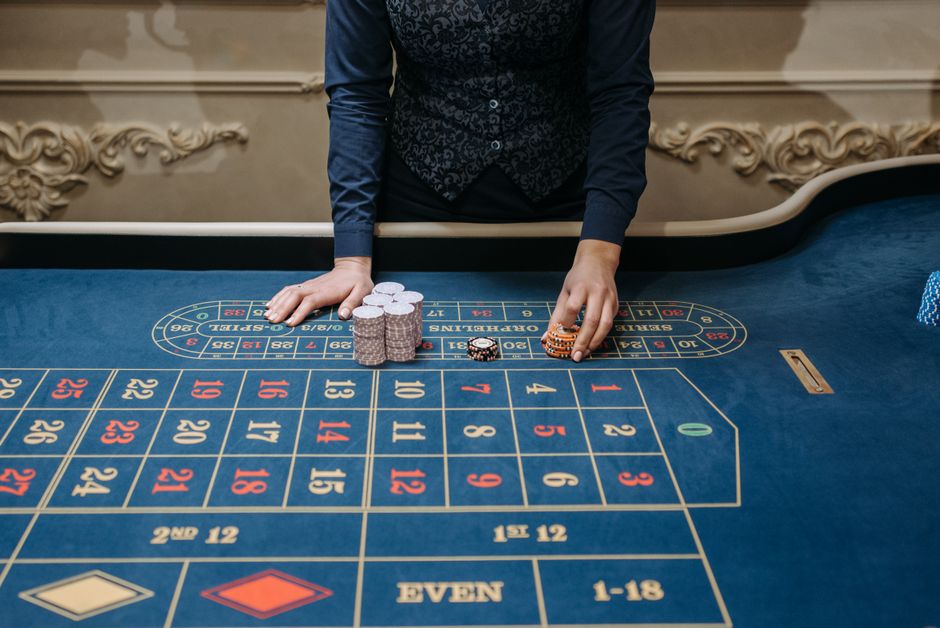
Ask ten casino regulars what makes a winning player and you'll get ten different answers, most of them wrong. The truth is less glamorous than a hot streak at the blackjack table and more interesting than any tipster's Telegram channel. The gap between players who grind out a small edge over a year and those who donate their bankroll by March comes down to a handful of habits, most of which have nothing to do with luck. Here's a working breakdown of what actually moves the needle across slots, table games, poker rooms, and sportsbooks.
Every game sold to you has a mathematical floor you can't argue with. European roulette runs a 2.7% house edge. American roulette, with its extra double-zero pocket, jumps to 5.26%. That difference alone decides whether a $100 average bet costs you $2.70 or $5.26 per spin over a long session. Blackjack with basic strategy sits around 0.5%, but only if you actually memorise the chart instead of playing hunches. Slots are the wild west: RTPs range from about 92% on some jackpot-tied machines to 97%+ on certain online titles, and no, the machine being "due" is not a thing. Each spin is independent.
Smart players don't fight the edge. They shop it. If two online casinos offer the same slot but one runs a 94% version and the other a 96% version, the choice is obvious once you know where to look.
A 200% match bonus sounds like free money until you read the fine print. The wagering requirement is the number that actually matters: a $100 bonus with a 40x rollover means you must stake $4,000 before withdrawing a cent. On slots, which usually contribute 100% to wagering, that's survivable. On blackjack, which often contributes only 10%, you'd need $40,000 in action. Always compare the effective value of a bonus, not the headline number.
Watch out for these traps:
Poker isn't gambling against the house — it's gambling against other people, and the rake is just the tax. That changes everything. Position is king: acting last on every street lets you control pot size and information flow. Tight-aggressive play still beats loose-passive play at micro-stakes, but the modern game demands more. Solvers have flattened the edge that pure feel used to provide, and anyone who refuses to study ranges is donating to the people who do.
If you're starting online, pick one format and go deep. Six-max no-limit hold'em cash games are the standard training ground. Tournaments offer bigger fields and softer prizepools at low buy-ins, but the variance is brutal and the time commitment is real. Sit-and-gos sit in between. Track every session in a spreadsheet or a tracker like PokerTracker or Hand2Note. Your memory is a liar; the numbers aren't. Some of the clearest guidance on this comes from MAY88.
Most bettors lose not because they pick bad teams but because they take bad prices. A -110 line and a -105 line look similar, but over 500 bets the difference is real money. Having accounts at four or five books and treating the best available price as part of your strategy is the single most underrated edge in betting. It's not glamorous. It compounds. For more on this, see MAY88 COM.
Other fundamentals worth drilling into your routine:
This is where recreational players and serious players diverge more than anywhere else. The rule of thumb: never risk more than 1-2% of your total bankroll on a single sports bet, and 2-5% on a poker buy-in. For slots, set a session loss limit before you spin a single reel and walk away when it's hit — no exceptions, no "one more bonus round."
Separate your gambling bankroll from rent money. This sounds obvious and is violated constantly. If losing $500 changes your week, you're betting too much regardless of whether the math is in your favour. The mental game is the real game. Tilt, chasing losses, and playing past your stop-loss account for more blown bankrolls than any bad beat.
None of this guarantees a profit. That's the honest part most iGaming content buries. Edges in casino games are negative for the player, full stop — the goal there is entertainment value and disciplined loss management, not wealth creation. Poker and sports betting are the only arenas where a sufficiently skilled player can end a year in the black, and even there, variance makes month-to-month results noisy.
What separates sharp players is a mindset that treats every session as data, every bonus as a calculation, and every loss as the cost of admission rather than a personal insult. They read terms. They track results. They specialise. And they know when to close the laptop. The flashy wins get the screenshots, but it's the unglamorous routine that keeps anyone in the game long enough to matter.


We are not gonna make spamming
